
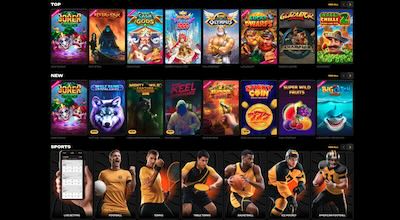
Game discovery is easier when a casino lobby is treated like a catalogue rather than a wall of colourful thumbnails. On the spinsy casino online platform, Canadian players can sort through slots, instant games, table formats, jackpots and live-dealer rooms from a browser. The practical question is not which title looks most exciting, but which type suits your preferred pace, level of interaction and tolerance for uncertainty. A few simple filters can make a large selection much easier to navigate.
Start with the style of play you actually want
Slots are usually the simplest place to begin if you want a quick, visual game with minimal decisions between spins. The catalogue includes standard video slots, feature-led titles and jackpot games, with sections such as New, Popular, Exclusive and Top helping narrow the choice. A search box is useful when you already know a title or provider, while category filters are better when you are exploring a theme or format without a fixed destination.
Instant games offer a different rhythm. They tend to focus on short rounds, simple objectives or rapidly changing outcomes rather than long feature sequences. They may suit someone who wants something more direct than a traditional slot, although speed can also make it easier to play without pausing. Setting a time or spending boundary before opening a fast-format game is more useful than relying on willpower after several rounds.
Table games create more room for decisions. Roulette, blackjack, baccarat and dice appear alongside poker-style options, while live casino sections add a streamed dealer and a more social table atmosphere. These formats are not interchangeable: blackjack involves choices during a hand, roulette centres on bet selection, and baccarat keeps player decisions relatively limited. Choosing by interaction level is often more helpful than choosing by game name alone.
Use the lobby filters as a discovery method
A large game catalogue becomes manageable when you apply one filter at a time. Start with the broad format—such as Slots, Table Games, Live Games, Instant Games or Jackpots—then narrow by provider if you have previously enjoyed a particular studio’s design style. Provider names can help identify familiar mechanics, but they do not guarantee that every title from that provider will have the same pace, volatility or feature structure.
The “New” and “Popular” groupings answer different questions. New titles can help you see recent additions, but they may have little playing history from your own perspective. Popular titles show what is receiving attention in the lobby, not what is objectively better or more likely to produce a favourable result. “Exclusive” is also a catalogue label, not proof of superior value. Treat these sections as starting points rather than recommendations.
Search becomes particularly useful when you are comparing a small number of games. Open the information panel where available and note the stated rules, paylines, bonus mechanics, minimum stake and any displayed return information. Demo play can help you understand controls and presentation, but a short session cannot establish a game’s long-term results, volatility or personal suitability. Use it to learn the interface, not to predict an outcome.
Match game type to the amount of attention available
Different formats demand different kinds of attention. A conventional slot may be easy to understand but repetitive over a long session. Blackjack requires you to follow the hand and make decisions, while live roulette or baccarat adds the pace of a real-time table. Game-show formats such as Crazy Time, Mega Ball and Deal or No Deal are more entertainment-led, with visual presentation and bonus stages playing a prominent role.
Live casino can feel more immersive because a dealer, table and other interface elements make the experience resemble a physical venue. That atmosphere can be enjoyable, but it may also encourage longer sessions. Decide in advance whether you want to watch every round or play only a fixed number of hands. If the table pace feels too fast, leaving the room is a more practical response than trying to recover losses through additional play.
Jackpot games deserve separate consideration because their appeal often comes from the prize concept rather than the underlying gameplay. A jackpot label does not explain the full rules, the frequency of smaller wins or the conditions attached to a particular prize. Read the game information before treating a large advertised figure as relevant to your own session. The same principle applies to tournaments and challenges: participation may change the experience, but it does not remove normal game risk.
Compare providers without treating names as guarantees
The provider directory includes a wide range of studios, from established international names to companies specialising in instant games, live tables or unusual slot mechanics. Comparing providers can be useful when you care about animation, interface design, bonus features or game themes. It is less useful as a shortcut for judging likely results. A familiar provider can publish games with very different rules, volatility profiles and maximum stakes.
Instead of asking whether one provider is “best,” identify the characteristic you want to compare. For example, you might look for low-complexity games, a slower feature sequence, live-dealer tables, or titles with a particular theme. Then inspect several games within that narrower group. Read the paytable and rules for each title rather than assuming that two games with similar artwork operate in the same way.
Independent information can also improve your understanding of gambling terminology and risk. The Responsible Gambling Council’s information resources provide Canadian-focused educational material, but they do not assess individual casino titles or confirm the terms of a specific operator. Use general guidance to frame your decisions, then rely on the individual game’s displayed rules for details such as features, eligible bets and stated probabilities.
Build a short list before choosing a title
A short list is more useful than opening games randomly. Select perhaps three formats that interest you—for example, one slot, one instant game and one table game. For each, record the basic information shown in the lobby or game panel: the type of play, whether demo mode is available, the minimum stake, the pace of rounds and any distinctive bonus feature. This makes comparison concrete without pretending that a brief trial can measure long-term performance.
Next, remove anything that does not fit the session you planned. A live game may be unsuitable if you have only a few minutes. A fast instant game may be a poor choice if you are already tired or distracted. A complicated slot may not be worth learning when you want a simple format. The best match is often the game that fits your attention and limits, not the one with the loudest artwork or biggest promotional language.
Finally, check the current game and account information before playing. Titles can be added, removed or reorganised, and the availability of a particular feature may depend on the Canadian lobby or account configuration. Do not assume that a game mentioned in an older review remains available, or that a displayed promotion applies to every title. If a rule, stake, feature or eligibility condition is unclear, ask support or consult the operator’s stated terms before making a decision.
Questions Canadian players often ask
Can demo play show whether a game is profitable?
No. Demo play can show how the controls, bonus rounds and visual layout work, but a short session cannot establish long-term returns or predict a future result. Use it to decide whether the format is understandable and enjoyable, then review the game’s stated rules before considering real-money play.
Are popular games better than new games?

Popularity only describes attention within the lobby. It does not prove that a title has better odds, lower volatility or a more suitable pace. New games may offer unfamiliar mechanics, while popular games may be easier to understand. Compare rules and features rather than relying on a category label.
Which format is easiest for a first session?
That depends on the decisions and pace you prefer. Slots and many instant games are straightforward to operate, while roulette and baccarat have simple core rules but different betting choices. Blackjack requires more active decisions. Read the rules, try the interface cautiously and choose a format you can stop comfortably.